Strata Industrial Units Singapore: Compliance With B1 Use Quantum
When people say “strata industrial units Singapore,” they often mean a very specific kind of purchase decision. It is not just about square footage, it is about what you are allowed to do inside that square footage, and how that approval framework affects your day-to-day operations, your ability to re-tenant, and your exit.
That is why the phrase B1 use quantum comes up so often in conversations with brokers, operators, and even the people who manage fit-out contractors. With B1 industrial property Singapore, you are not buying a blank industrial shell. You are buying into a controlled use regime where the approved industrial intent has to remain real, measurable, and persistent over time.
This article focuses on the compliance side that matters for strata industrial property Singapore: what B1 “use quantum” requires, how that intersects with B1 vs B2 industrial zoning, what buyers often miss in practice, and how these decisions relate to the commercial realities of buying industrial property Singapore, financing, and holding.
Why “use quantum” is not paperwork, it is your operating constraint
B1 industrial property Singapore sits in a planning lane designed for clean industry and lighter industrial activity. URA’s B1 framework is explicitly oriented around uses such as clean industry, light industry, warehouses, public utilities and telecom uses. It also notes that uses that need a nuisance buffer of more than 50m are generally not allowed, while other general industrial uses may be considered case by case if buffer requirements are met.
That high-level intent is where the B1 “use quantum” rule becomes crucial. In a B1 development or strata unit, URA states that at least 60% of the floor area or GFA must be used for industrial purposes. The remaining portion is limited to ancillary or supporting uses, and approved secondary uses.
Translated into operator language, the rule is telling you that you cannot treat the industrial floor area as a decorative label while running a mostly non-industrial business. It also means the way you allocate space in your unit, how you schedule activities, and even how you define what counts as industrial usage can create real compliance risk if you are casual about it.
I have seen this play out in a straightforward way: a tenant takes a unit, sets up a front-facing area for non-core activities, and then gradually reallocates space as their business evolves. At first, it looks efficient. Later, it becomes harder to justify how the industrial portion still meets the required industrial use quantum. The friction often shows up when renewals, re-tenant discussions, or internal reviews force the question, “Do we still meet the 60% industrial floor area requirement?”
For anyone buying industrial property investment Singapore, that is not a one-time check. It is an ongoing condition of holding.
B1 versus B2: the zoning signal you cannot ignore
B1 vs B2 industrial zoning is often discussed in the abstract, but it is usually reflected in the type of unit specs and the likely intensity of use. In URA and JTC materials, B1 is positioned for light and clean industrial activity, and B2 is aligned with heavier industrial use.
The practical difference is that B2 units commonly show higher floor loading and different height specs than B1 flatted factories, reflecting heavier use potential. Even if you are not doing heavier work today, choosing the wrong category for your business model can box you in later when you expand, change processes, or adjust layouts.
This is one of those trade-offs that feels less important in the viewing stage. During viewing, you are focused on access, basic layout, and whether the unit “fits” today. Zoning is slower to reveal its impact because it does not change how a door opens. But zoning determines what you can be approved to do, and B1 vs B2 is one of the biggest upstream levers.
If you are considering a strata industrial units Singapore purchase and you are tempted to think “B1 is good enough for most business,” you still need to anchor decisions to the B1 use quantum rule. Because even within B1, the allowance is not “anything goes.” It is clean and light industrial intent with a measurable industrial footprint.
What counts as industrial intent in a B1 strata unit
URA’s B1 framework describes B1 suitability for clean industry, light industry, warehouses, public utilities and telecom uses, and it also identifies that some non-industrial uses may require separate approval or are constrained. URA and JTC materials also commonly describe B1 unit suitability for light manufacturing, food packing or processing-related uses, e-business, printing or publishing, media and similar clean uses.
Where people run into trouble is when they treat the business description as the entire compliance story. In reality, the compliance story is about how the unit is actually used, because B1 use quantum is floor-area-based. If your “industrial” portion keeps shrinking while the ancillary or Space Nova showflat secondary portion grows, you can move out of compliance even if the overall business still sounds broadly industrial in marketing terms.
This matters more for operators with mixed functions. For example, a company that does both processing and sales, or runs both warehousing and customer-facing activities, needs to be deliberate about space allocation. A compact showroom might be fine, but if it expands into a large footprint that displaces industrial operations, you can end up with a mismatch between your floor plan and the 60% requirement.
The compliance mindset for buyers: start with your floor plan, not your tenant pitch
The cleanest way to think about B1 use quantum compliance is to treat it as a design and operations discipline. Before you buy, ask yourself how you would keep the industrial portion consistently meaningful. If your unit will be used as part of industrial supply chain operations, the industrial portion is typically easier to justify because the workflow naturally occupies dedicated space.
But if your business model leans heavily on office work or service delivery, you should assume that you will face more friction in how the “industrial purposes” space is defined and defended. Even when a business is “industrial-adjacent,” B1 use quantum is still a floor-area requirement, so you need clarity on which areas genuinely support industrial use.
This is also why ramp-up industrial units Singapore and layout considerations come up in real discussions. Ramp-up factories provide direct vehicular access for loading and unloading, while flatted factories are generally accessed via common corridors, lifts and loading bays. Those logistics features affect how industrial processes run, which in turn influences how naturally the industrial footprint can be maintained.
For some tenants, a ramp-up layout makes it easier to keep industrial operations active across more of the unit, because moving goods in and out is operationally efficient. For others, a flatted factory can still work, but the unit’s effective workflow might concentrate activities in specific zones. If the industrial workflow is naturally concentrated, you may need to be more intentional about the 60% industrial allocation across the rest of the floor area.
Quick checks you can do before you commit (and before you sign)
You cannot “audit” compliance just by reading a listing. Still, you can reduce the risk by using a small set of practical questions during due diligence. These questions are about aligning your intended use to the B1 framework and the 60% industrial floor area requirement.
- Is your planned use aligned with B1 industrial property Singapore suitability for light industrial, clean industry, warehouses, and similar uses, rather than a model that needs large nuisance buffers?
- In your proposed floor plan, can you reasonably keep at least 60% of floor area used for industrial purposes over time, not just at the start?
- What portion of the remaining area is truly ancillary or supporting, and what portion might be treated as secondary use that needs approval?
- Does the unit’s technical setup support the industrial workflow you are counting on, such as goods handling and access consistent with the building’s provisions?
- If you plan to operate through different business functions, how will you prevent the non-industrial portions from gradually expanding and squeezing industrial space below the required threshold?
These are not theoretical questions. They are the questions that surface when a business evolves, a tenant changes, or a landlord needs to explain a unit’s permitted use story clearly.
City-fringe locations and the B1 fit: why Tai Seng and Paya Lebar come up
City-fringe industrial property Singapore areas like Tai Seng industrial property, Paya Lebar industrial property, Ubi, Kallang and MacPherson are often discussed for e-commerce, light manufacturing, R&D and urban logistics because they are closer to workforce catchments and transport links. URA’s B1 planning maps also show B1 industrial clusters around city-fringe MRT areas.
This proximity can be operationally valuable for light industrial activity and clean industrial operations. It also fits the broader description of B1 uses that are generally clean and do not require the kinds of nuisance buffering associated with heavier industrial activity.
Still, location does not override use quantum. A city-fringe unit does not become “more flexible” because it is near transport links. If anything, city-fringe units attract mixed-use operators more often, because customer-facing models can look appealing. That is where B1 compliance discipline is even more necessary: proximity makes it tempting to allocate more space to activities that do not obviously qualify as industrial purposes.
Freehold versus leasehold industrial Singapore: planning your exit as carefully as your entry
People ask whether buying freehold industrial property Singapore is “worth it,” especially when they are comparing industrial property investment Singapore options.
Here is the reality with what is generally observed in the market: freehold industrial space is relatively scarce in Singapore because much new industrial supply is on leasehold land, and JTC’s estate and unit pages commonly show 60-year, 30-year or 20-year lease terms for industrial sites depending on the estate and product.
That scarcity changes the buyer’s mindset. Leasehold industrial Singapore can still be a sensible investment, but you have to be more careful about the holding horizon. Because industrial tenancies and compliance constraints are not static, your exit planning needs to anticipate how easily the unit can remain attractive to tenants within the approved industrial use framework.
If your unit is correctly positioned for B1 uses and can maintain the industrial footprint required under the B1 use quantum rule, you improve its robustness as a rental or operating asset. If your strategy requires frequent changes that may be harder to defend within B1 constraints, leasehold tenure becomes a higher-risk variable simply because your time window is shorter.
Industrial property stamp duty Singapore: what is different from residential
Stamp duty is where many buyers discover they are thinking about the wrong property category.
On the acquisition side, the context here is that industrial property is not subject to Additional Buyer’s Stamp Duty (ABSD). ABSD is applicable to residential property acquisitions, while industrial transactions are instead subject to normal BSD rules. On disposal, Seller’s Stamp Duty (SSD) may apply to industrial property where applicable, and the holding period matters.
For SSD, IRAS applies seller’s stamp duty for industrial property disposals based on holding period, with rates of 15% if sold within 1 year, 10% within 1 to 2 years, 5% within 2 to 3 years, and none after 3 years.
This matters for industrial property investment Singapore because the “buy to hold” thesis is often tied to your expectation of tenant stability and your ability to keep the unit aligned with the approved use. If your compliance positioning is weak and re-tenant risk rises, you might be forced into an earlier exit. That is when SSD becomes financially meaningful, because your holding period could fall within the higher bands.
Industrial property loan Singapore: financing follows how lenders view the asset
Industrial property loan Singapore arrangements are often assessed differently from residential lending. The financing process is typically influenced by lender assessment and commercial terms rather than residential housing loan rules.
In practical terms, this means you should expect your application to be evaluated with the asset’s commercial use, rentalability, and compliance posture in mind, even if the loan underwriting language stays generic. Lenders do not underwrite only a building, they underwrite the ability of the asset to generate returns within the rules that apply to it.
For a B1 strata unit, the linkage between your business use and B1 use quantum can indirectly affect financing comfort, because the lender’s view of “what the tenant can do” connects to the unit’s expected income resilience.
It is also common for investors to buy industrial property under company name, because industrial assets are frequently used for business purposes or held for investment through an entity. Stamp duty treatment is not identical across asset types and buyer profiles, and ABSD new launch industrial property Singapore is tied to residential rules. Industrial stamp duty treatment can still apply on disposal regardless of buyer profile, with SSD based on holding period.
Strata industrial units Singapore: the often-missed compliance reality in shared settings
Strata ownership can feel straightforward because you are buying a unit that appears self-contained. Yet compliance is not only about what happens behind your door. With strata industrial property Singapore, your operational needs still interact with shared building design, building rules, and how use is represented.
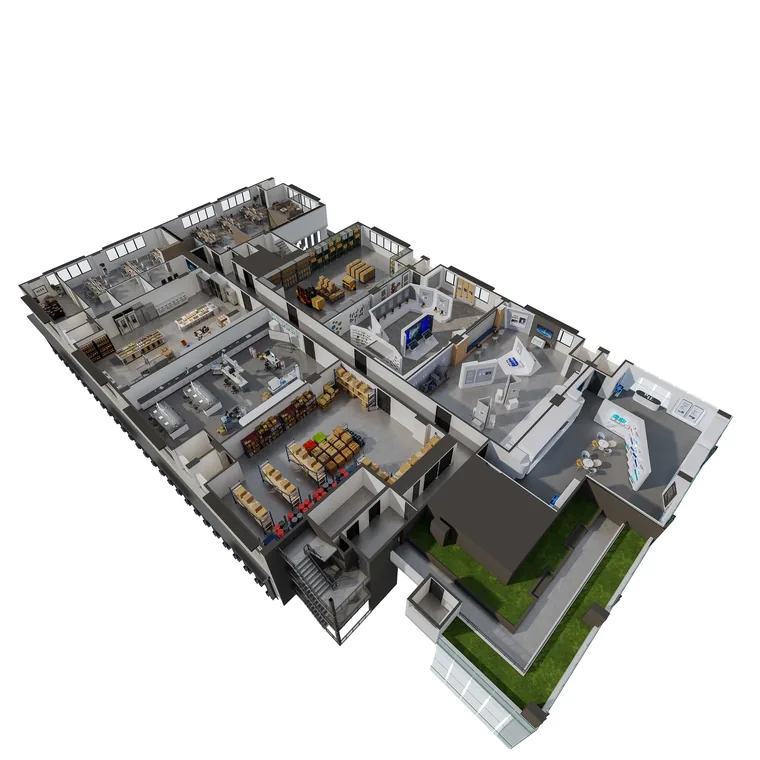
For example, B1 is defined at development and strata unit level, and URA’s B1 use quantum requirement applies to B1 developments or strata units. That means the building and unit context is part of the compliance picture, not just your intention.
So even if your unit’s layout is perfect, you still need to consider practical constraints that affect how industrial activities run, including goods movement and access arrangements typical to the building type. JTC technical checks for strata industrial units commonly include floor loading, ceiling height, goods lift access, loading-bay provision, and whether the trade matches the approved use.
Those checks are not cosmetic. They directly influence whether industrial work can be conducted in a way that is credible as industrial purposes, and they influence how your tenant can operate without constant workarounds that gradually shift your space allocation.
Rental yield expectations and liquidity: why compliance affects more than legality
People do ask about industrial property rental yield Singapore. The straightforward answer is that industrial rents can offer different yield profiles depending on the market and tenant demand, but industrial liquidity is often trade-specific and sensitive to approved use, lease tenure, strata size, and building specs.
That sensitivity is directly connected to why compliance matters. If your unit’s approved use positioning is clear and defensible within the B1 framework, it is easier to match it to tenants whose operations align with industrial purposes and who can maintain the required industrial footprint.
If compliance is ambiguous, you may still find a tenant initially, especially if a tenant is focused on space rather than approvals. The real challenge often shows up at renewal time or when you have to explain constraints to a new tenant.
Because B1 use quantum is a floor-area requirement tied to industrial purposes, a unit’s tenant mix and operational layout can become a long-term factor in your ability to sustain rental demand.
A few real-world scenario patterns I have seen in B1 strata discussions
To make this more tangible, here are common patterns that come up when people test B1 fit during unit selection. These are not about inventing facts, they are about showing how the rule translates into day-to-day decisions.
First pattern: “We will keep the unit industrial, but we want a bigger office.” Office space is not automatically disallowed in B1 contexts, but B1 use quantum requires 60% of floor area used for industrial purposes. If the office grows by pushing industrial operations into a smaller footprint, you risk slipping below the requirement.
Second pattern: “We are clean, so any business is fine.” Some non-industrial uses may require separate approval or be constrained, and B1 is still designed for clean industry, light industry, warehouses, and similar intent. Clean does not mean unconstrained, especially when the rule is explicitly floor-area based.
Third pattern: “We might switch business later.” This is where B1 vs B2 matters. A unit positioned for B1 clean and light uses may be less comfortable if your later processes resemble heavier industrial activity. And even within B1, your planned space allocation still has to keep at least 60% for industrial purposes.
If you are investing, these patterns are where you should focus on exit risk. The best time to evaluate exit risk is before you buy, not when your tenant relationship is strained.
Buying strategy: align what you can do with what you can keep doing
Strata industrial units Singapore can be a strong fit for the right operator, especially when your business is aligned with clean, light industrial processes and you can maintain the industrial footprint required under B1 use quantum.
The “alignment” has multiple layers. It is zoning intent, it is the 60% industrial floor area requirement, it is how ancillary and secondary uses are limited, and it is whether your unit’s logistics and technical provisions support the industrial workflow you need.
If you plan your business layout around that from day one, you avoid the slow drift that can happen when a unit becomes more service-heavy than industrial-heavy. If you are an investor, that planning also improves your ability to keep the asset rentable because you are matching the unit to tenants who can credibly operate within the B1 framework.
On top of that, you should integrate the other practical constraints: stamp duty rules for industrial transactions, possible SSD on disposal depending on holding period, and the way industrial property loan Singapore decisions may be assessed through commercial terms and lender judgment.
Finally, freehold vs leasehold industrial Singapore affects your time horizon. If freehold is scarce, as market supply patterns suggest, you may have to treat leasehold tenure as part of the risk model rather than an afterthought.
One last question worth asking before you commit
If you were forced to explain your compliance position in a clear, evidence-based way, could you demonstrate how your unit will keep at least 60% of floor area used for industrial purposes, while the remaining portion stays within ancillary, supporting, or approved secondary uses?
If that question feels easy, you are likely buying the right category for the right kind of industrial operation. If that question feels uncomfortable, it may not be a problem today, but it is a risk that can compound once your operations shift or once you have to re-tenant.
For many buyers, that is the difference between “we can make this work” and “we can keep this defensible.”