B1 Industrial Zoning Singapore: When Secondary Uses Are Allowed Within Limits
If you are shopping for B1 industrial property Singapore, you will quickly notice one recurring theme in the paperwork and leasing conversations: B1 is not “anything goes”. It is designed for clean industry and related activities, and it comes with rules on how much of the development or strata unit must be used for industrial purposes, plus limits on what you can do as secondary uses.
That matters, because many business owners and investors start with a plan that is broader than “factory”. They want packing, light processing, office time, training, some showroom or service element, maybe even a tenant who is not strictly manufacturing. The difference between a smooth operating setup and a frustrating compliance issue often comes down to whether the use fits B1’s intent and whether the approved use quantum is respected.
Below is how to think about B1 secondary uses in a practical, decision-ready way, especially if you are considering strata industrial units Singapore, freehold industrial property Singapore, or even buying industrial property under company name.
What B1 is trying to protect: the “clean industry” intent
B1 Click here industrial zoning Singapore is intended mainly for clean industry, light industry, warehouses, public utilities and telecom uses. The planning logic behind this is fairly straightforward: B1 generally supports uses that do not create the kind of nuisance buffer requirement you would expect from heavier industrial processes.
URA’s guidance also reflects a buffer-sensitive approach. Uses that need a nuisance buffer of more than 50m are generally not allowed. That is a useful filter when you are evaluating an “in-between” use, like a workshop that wants to expand into something more intense, or a business that adds an extra function that could change the nuisance profile.
This is also why the “B1 vs B2 industrial zoning” question matters early. B2 is the heavier-industrial category, and the practical takeaway is that B2 units are typically positioned for higher-intensity industrial potential. In contrast, B1 units are commonly suited for lighter and cleaner activities. For anyone comparing industrial property investment Singapore options, this is not just a label. It affects tenant demand, approval pathways, and how much flexibility you have when the business model evolves.
The key rule: industrial use quantum (more than half is not enough)
In B1, the most important compliance concept is the industrial use quantum. URA states that at least 60% of the floor area, also referred to as GFA in a B1 development or strata unit, must be used for industrial purposes.
The remaining area is limited to ancillary and supporting uses and approved secondary uses. This is the line you cannot blur without consequence.
You can think of it like this: secondary uses in B1 are not automatically “wrong”, but they are always bounded. If your plan quietly drifts, for example from office-support space into something that starts behaving like a separate non-industrial activity, you can run into the exact issue URA is trying to manage. The “60% rule” is the quantitative anchor for these decisions.
A common real-world scenario goes like this. A small manufacturer buys a strata industrial unit because the rent and technical specs work. Over time, they add more desk-based work, more visitor handling, and more sales activity. If the extra functions grow large enough, the premise that the unit is “primarily industrial” becomes hard to defend. That does not mean office work is disallowed, but it does mean your secondary use has to stay within the limited quantum and fit within what is considered ancillary, supporting, or an approved secondary use.
What counts as “secondary” in B1, and why “approved” is the word
URA guidance for B1 includes allowable uses and indicates that some general industrial uses may be considered case by case if buffer requirements are met. It also points to the fact that B1 units commonly suit light manufacturing, food packing or processing-related uses, e-business, printing or publishing, media and similar clean uses. Some non-industrial uses need separate approval or are constrained.
That “some non-industrial uses need separate approval” part is where many investors stumble. In practice, people often hear “B1 allows secondary uses” and mentally translate it into “I can run a mixed-use business as long as I keep it neat”. B1 does not work like that.
If your proposed activity changes the nature of the use, not just the scale, approvals can become necessary. Even when you are confident your day-to-day operations are “clean”, you still have to map the activity to what the authorities have already accepted as industrial, ancillary, supporting, or secondary in the approved configuration.
This becomes especially relevant for anyone considering:
- strata industrial units Singapore where internal layout and allocation of space directly affect how you argue the 60% industrial use quantum
- light industrial space for sale Singapore where marketing sometimes uses general language, but the operational reality still must match the approved use
- businesses that plan to operate as a hybrid model, for example light manufacturing plus frequent public-facing activity
When secondary uses are allowed: a practical way to test your plan
Rather than treating B1 rules as abstract compliance text, I suggest running your plan through a simple reality check: does the secondary use stay “supporting” rather than “replacing” the industrial purpose?
In B1, secondary uses are limited to supporting or approved secondary uses while industrial purposes must remain at least 60% of the floor area/GFA. The rest is where most discretion and interpretation sits, and that is why the details matter.
Here are the kinds of decisions that typically determine whether the secondary use remains within limits:
-
Space allocation and how you measure it
If the secondary activity uses space that expands over time, the industrial portion may stop meeting the 60% requirement. For strata units, this can be sensitive because internal partitions and fit-out choices can make the industrial vs secondary split hard to defend later. -
Function drift
A use can start as ancillary, then evolve into something more autonomous. B1 allows only limited secondary uses, so you need to monitor how your operations change once revenue streams and staffing grow.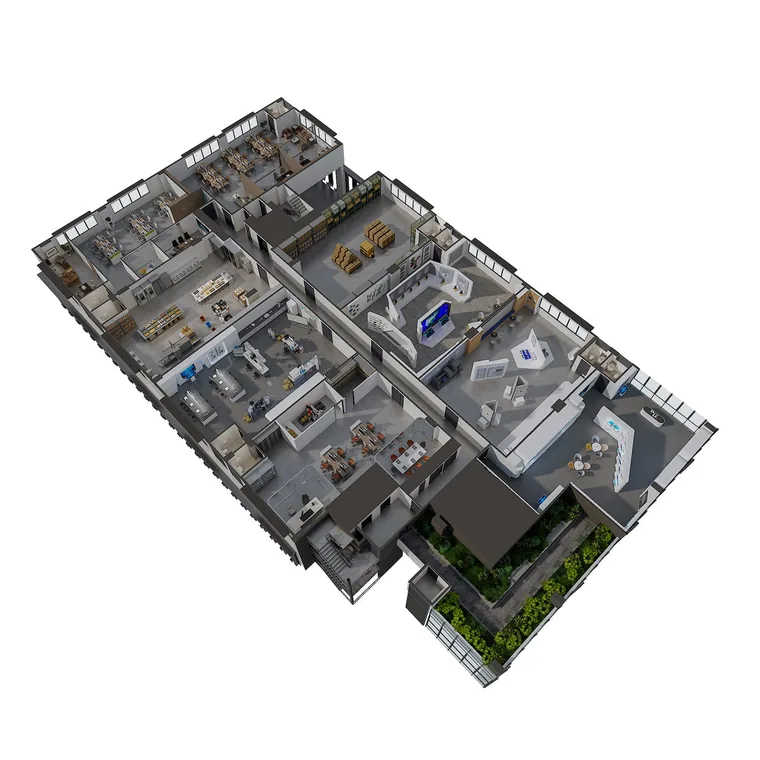
-
Nuisance profile and buffer sensitivity
URA’s guidance that uses needing a nuisance buffer of more than 50m are generally not allowed is a strong reminder that intensity matters, not just cleanliness. If your process changes, even slightly, revisit whether it still fits the B1 expectation. -
Operational “feel” vs approved intent
Many businesses look and sound similar on paper, but approval decisions hinge on what the use actually is. This is where the “approved secondary uses” language becomes non-negotiable.
If you are comparing “buy industrial property Singapore” options, this is why you should also evaluate your tenant profile and exit plan. Secondary use constraints can affect resale liquidity, because future buyers and occupiers may have different intended operations.
B1 vs B2: why the zoning category affects your flexibility
“B1 vs B2 industrial zoning” is not only about what you can do today. It is about how easily you can adapt when your business matures.
From the guidance provided, B2 is the heavier-industrial category, and B2 listings for units typically reflect different specs that align with heavier use potential. Meanwhile, B1 is positioned for clean and light industrial activities. Practically, that means a B1 unit can be a great home for certain businesses, but if your plan begins to resemble heavier industrial use, you will feel the limits sooner.
This is also relevant to ramp-up factory strategies. Ramp-up industrial units Singapore are often chosen for more direct vehicular access and better loading or unloading logistics, which can support operational scaling. But even if the unit is physically designed for growth, the zoning and use quantum still cap what the growth can be.
Tenure, supply, and why freehold feels attractive but is rarer
Many buyers ask about freehold vs leasehold industrial Singapore options, often because freehold industrial property Singapore feels like a hedge against long-tenure risk.
However, in the industrial market, freehold tends to be relatively scarce because much new industrial supply is on leasehold land. JTC’s estate and unit pages commonly show lease terms such as 60-year, 30-year or 20-year depending on the estate and product. That does not make freehold automatically “better”, but it does mean you should treat freehold as a selection criterion, not the default assumption.
For investors evaluating industrial property investment Singapore strategies, Space Nova tenure matters because it affects total holding period economics and how long you can rely on your planned operating model and any secondary use arrangements.
Location choices: city-fringe demand and operational fit
City-fringe industrial precincts like Tai Seng industrial property, Paya Lebar industrial property, and other areas such as Ubi, Kallang, and MacPherson are often favoured for e-commerce, light manufacturing, R&D, and urban logistics because they sit closer to workforce catchments and transport links. URA’s B1 planning maps also show B1 industrial clusters around city-fringe MRT areas.
This matters for secondary uses because city-fringe demand often supports businesses that need more flexible coordination with customers, staff, and third-party logistics partners. Still, convenience does not override zoning. Even in a city-fringe B1 industrial property Singapore setting, the 60% industrial use quantum and the “approved secondary uses” concept still apply.
So, if your business plan leans toward a model with more administrative coordination, packaging workflows, and clean operational interfaces, B1 in these locations can align well. If your model leans toward heavier processes, you are more likely to run into the boundary between allowed and not allowed use types.
Strata units: technical checks that affect what you can do
When you deal with strata industrial units Singapore, the zoning story does not live alone. You also need to satisfy the unit’s technical and operational constraints because they influence how your business operates.
JTC listings commonly highlight technical checks such as floor loading, ceiling height, goods-lift access, loading-bay provision, and whether the trade matches the approved use. These details are not mere engineering trivia. They shape whether your operational plan, including secondary uses, is realistic.
For example, if your secondary activity is tied to packaging or inbound material handling, loading access and goods lift capability can matter a lot. If your secondary use is office-heavy, ceiling height and loading-bay provision might still be less critical, but the approved use alignment remains critical. Even if you intend to keep the secondary use “clean”, the unit’s specs can limit how you run the industrial portion efficiently, which affects whether you will still be able to justify the operational split later.
Financing and acquisition realities: industrial loans and how buyers structure deals
If you are planning to buy industrial property Singapore using an industrial property loan Singapore, it is useful to know that industrial buyers are often assessed differently from residential buyers. Financing for property investment generally depends on lender assessment, and non-residential loans are typically under commercial terms rather than residential housing-loan rules.
This does not directly change B1’s zoning rules, but it affects your decision timing and affordability. If your plan depends on a certain business setup that relies on secondary uses, you should ensure you can operate within B1 boundaries from day one, not after a financing agreement forces delays.
Many investors also consider buying industrial property under company name. It is common for industrial assets used for business or held for investment. While the stamp duty landscape is broader than just company vs individual, the key practical point for your planning is that industrial stamp duty rules can still apply on disposal, and seller’s stamp duty can be triggered based on holding period.
Stamp duty and holding period: the “cost of being wrong” later
People often focus on purchase cost and forget the compliance cost that can emerge at disposal. For industrial property, there is also a distinct stamp duty treatment compared with residential.
Additional Buyer’s Stamp Duty (ABSD) applies to residential property acquisitions, and industrial property is not subject to ABSD. Instead, industrial transactions are subject to normal BSD rules and, on disposal, seller’s stamp duty for industrial property where applicable.
For seller’s stamp duty (SSD) on industrial property disposals, IRAS applies rates based on holding period. The holding period brackets provided are:
- 15% if sold within 1 year
- 10% if sold within 1 to 2 years
- 5% if sold within 2 to 3 years
- none after 3 years
This is relevant to B1 secondary uses because secondary use constraints can affect how quickly you can reposition the tenant mix or sell to a buyer who needs the same approved use profile. If your operating plan changes, your exit timeline may change too, and stamp duty becomes part of the real risk calculus.
GST note if you are buying a new non-residential property
If you are looking at a new launch industrial property Singapore opportunity or a new development from a GST-registered seller or developer, GST may apply on the purchase. IRAS indicates buyers of non-residential properties must pay GST if the seller is GST-registered.
This is the kind of detail that can tilt your total cost basis and therefore your target industrial property rental yield Singapore expectations. I will keep the yield discussion anchored to what is supportable here: industrial units can offer higher rental yields than residential in some cases, but resale liquidity is generally more trade-specific and sensitive to approved use, lease tenure, strata size and building specs. That sensitivity directly ties back to whether your intended secondary uses are within B1 limits.
A short due diligence checklist before you commit
If you are evaluating a B1 unit and you want confidence that your secondary uses stay within limits, you should do your homework in a way that is operational, not just legal.
Here is a compact checklist that reflects what typically matters most in B1 use quantum and use alignment:
- Verify the B1 rule that at least 60% of floor area/GFA is for industrial purposes, and map how your plan allocates space
- Confirm what secondary uses are considered ancillary, supporting, or approved, and whether your planned activity needs separate approval
- Check whether your intended use could be viewed as requiring a nuisance buffer of more than 50m, since those uses are generally not allowed
- For strata units, review technical specs like floor loading, ceiling height, goods-lift access, and loading-bay provision against your operational workflow
- Reassess your exit plan and resale buyer profile, because liquidity can be sensitive to trade-specific and approved-use alignment
This checklist is intentionally short. In my experience, long checklists create false comfort. The goal is to surface the few factors that genuinely determine whether you can operate without “surprise reclassification” risk.
Edge cases I see in practice: where plans slip out of bounds
B1’s rules can feel forgiving when the business is small. The risk rises when you scale in ways that quietly change the nature of space usage or the intensity of activity.
One edge case is “soft office takeover”. A business starts with an industrial function that obviously occupies the majority of space. Over time, it adds administrative staff, customer-facing processes, and outsourced coordination. If that secondary component expands, you can end up compressing industrial use below the 60% threshold, even if the unit still looks like it is mostly industrial.
Another edge case is “secondary function becoming the main show”. Some businesses try to use the industrial unit as a production base for products, while the real revenue comes from a service layer that may not be comfortably characterized as industrial. Even if the service is clean and operationally tidy, the zoning intent is industrial first, secondary limited.
A third edge case is “process evolution”. If the business changes its inputs, production steps, or output handling, the nuisance profile can shift. URA’s guidance about nuisance buffer needs is not a curiosity, it is a boundary. If your process begins to resemble a heavier industrial category in terms of impacts, a B1 plan can stop matching reality.
These edge cases are not theoretical. They are the kinds of operational drifts that happen when teams grow, and it is exactly why the B1 industrial zoning rules emphasise industrial use quantum and approved secondary uses.
Putting it together if you are buying or investing now
If you are considering industrial property investment Singapore and narrowing to B1, treat B1 as an industrial-first product with controlled flexibility. The flexibility exists, but it is bounded by the 60% industrial use quantum and by what qualifies as ancillary, supporting, or approved secondary uses.
If you are shopping by area, city-fringe precincts such as Tai Seng industrial property and Paya Lebar industrial property can align with B1’s practical demand patterns for e-commerce, light manufacturing and clean workflows. If you are shopping by tenure, keep the reality of freehold vs leasehold industrial Singapore in mind, since freehold tends to be relatively scarce.
If you are buying a unit intended for light industrial space for sale Singapore, focus less on marketing language and more on how your current and next-stage business will occupy space and evolve operationally. Then, once your plan is mapped, run the financing and acquisition mechanics, whether you are taking an industrial property loan or structuring the purchase.
Finally, remember that exit economics matter. Seller’s stamp duty for industrial property is tied to holding period bands, and liquidity can be trade-specific. A zoning-compliant operational plan is not just a regulatory checkbox, it is also what helps you keep options open if you need to sell, restructure, or pivot.
Quick guide for B1 buyers deciding “secondary” upfront
B1 does allow secondary uses, but they are not an afterthought. Start with the industrial use quantum, then test your secondary functions against the “ancillary/supporting/approved secondary” concept, and cross-check nuisance sensitivity and unit technical fit. If you do that work early, you can use B1’s advantages in light industry and clean operations without building your business model on assumptions that do not translate into approvals.
That is the real value of understanding B1 properly, whether you are buying B1 industrial property Singapore, comparing it with B1 vs B2 industrial zoning, or deciding whether strata units or JTC leasehold industrial options best match your ramp-up and long-term operating plan.